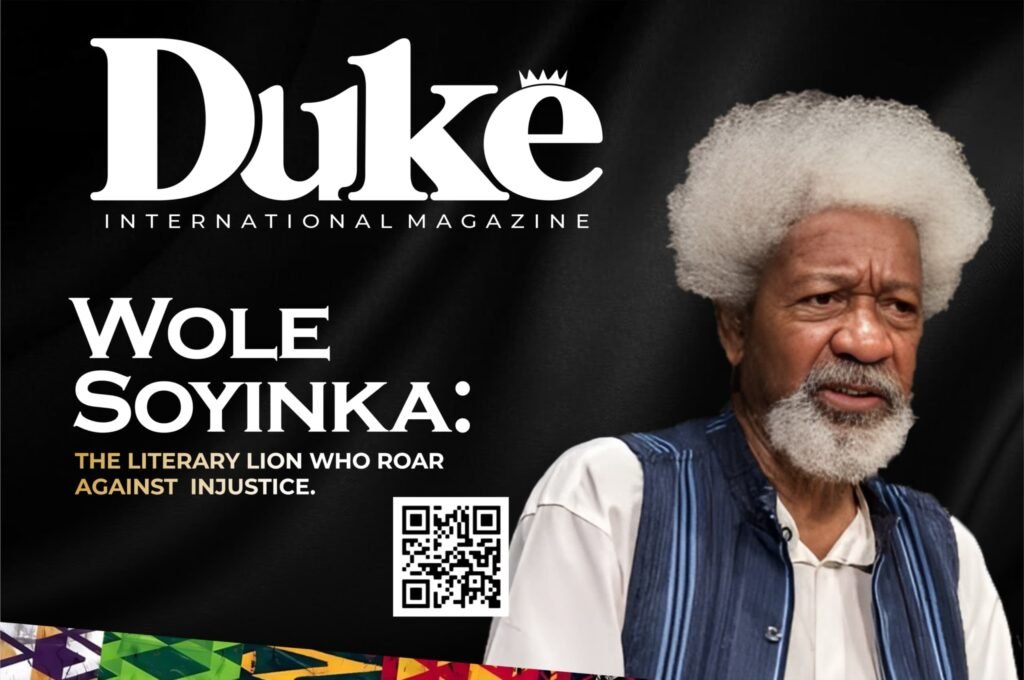
There are writers, and then there is Wole Soyinka – Africa’s first Nobel laureate in literature, a fearless political activist, and a cultural icon whose influence spans continents. At 89, the Nigerian playwright, poet, and essayist remains one of the most vital intellectual voices of our time, proving that the pen can indeed be mightier than the sword.
A Life Written in Bold Strokes
Born in 1934 in Abeokuta, Soyinka’s extraordinary journey began in colonial Nigeria and unfolded against the backdrop of independence movements, military dictatorships, and Africa’s cultural renaissance. Educated at University College Ibadan and Leeds University, he returned home in 1960 with a radical mission: to decolonise African literature while holding power to account.
The Stage as Battleground
Soyinka’s plays – from Death and the King’s Horseman to The Lion and the Jewel – blend Yoruba mythology with sharp political commentary. His works don’t just entertain; they provoke. During Nigeria’s civil war, his activism landed him in solitary confinement for 22 months, an experience that birthed The Man Died, one of literature’s most powerful prison memoirs.
Nobel Glory & Global Influence
When Soyinka won the Nobel Prize in Literature in 1986, the committee praised his ability to “fashion the drama of existence.” True to form, he used his acceptance speech to condemn apartheid in South Africa. This moment typifies Soyinka’s life: artistic brilliance inseparable from moral courage.
The Eternal Dissident
Even in his ninth decade, Soyinka remains Nigeria’s conscience. In 2023, he publicly destroyed his green card to protest American police brutality. When military rule threatened Nigeria in the 1990s, he fled on a motorbike with the junta in pursuit. Today, his Lagos home remains a salon for young activists and artists seeking wisdom.
Why Soyinka Matters Now More Than Ever
In an age of shrinking attention spans and political apathy, Soyinka’s life reminds us that intellectuals must engage with the world. His works teach us that tradition and progress need not clash, that art must challenge power, and that laughter (he’s a renowned wit) can be revolutionary.
As he once wrote: “The greatest threat to freedom is the absence of criticism.” This literary lion’s roar still echoes across generations.
Which Wole Soyinka work has inspired you most? Share your thoughts below!