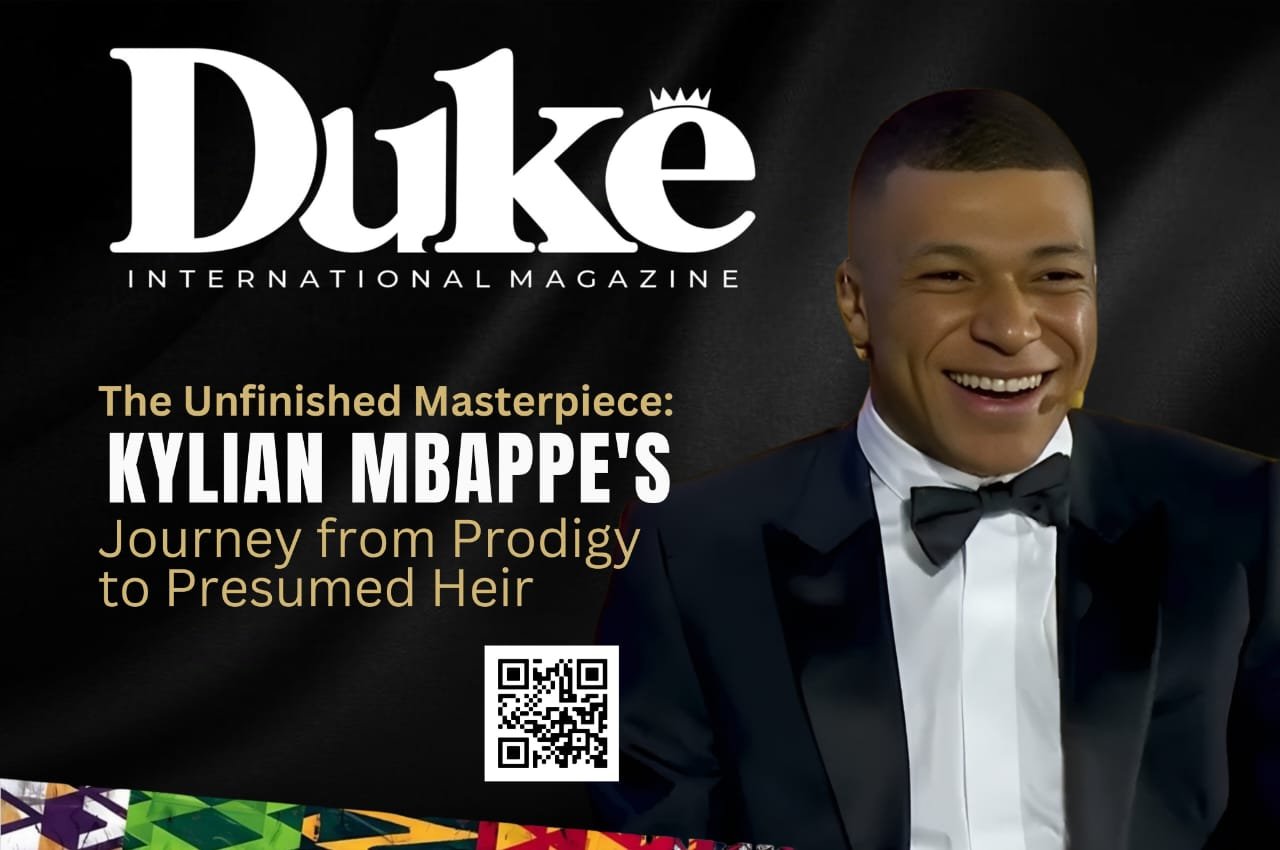
The narrative of Kylian Mbappé has always unfolded at a breathtaking pace, a story of such precocious talent and accumulated glory that it seemed pre-written. From a child in the Parisian suburb of Bondy to a World Cup champion at nineteen, his career has been a masterclass in fulfilling destiny.
Yet, his latest chapter at Real Madrid reveals a more complex portrait: that of a phenomenal goalscorer navigating the immense weight of expectation, where individual brilliance is both the solution and the subject of scrutiny.
Born in Paris in 1998 to a Cameroonian father and an Algerian mother, Mbappé’s talent was evident almost immediately. His youth coach at AS Bondy recalled a six-year-old who was fundamentally different, with fantastic dribbling and speed beyond his years. This prodigious path led him to Monaco, where he shattered records, becoming their youngest-ever player and goalscorer—displacing a certain Thierry Henry on both lists—and winning a French league title as a teenager.
His subsequent, seismic transfer to Paris Saint-Germain cemented his superstar status. There, he became the club’s all-time leading scorer, collecting multiple domestic honours and forging his reputation as one of the most potent forwards in the world.
It is on the international stage, however, where Mbappé’s legend found its most iconic moments. His performances for France have been nothing short of historic. At the 2018 World Cup, he became the second teenager after Pelé to score in a final, helping his nation lift the trophy.
Four years later, he delivered a stunning hat-trick in the final against Argentina, finishing as the tournament’s top scorer and becoming the first player to score four goals across two World Cup finals. These feats have made him a symbol of modern, multicultural France, a role he embraces with thoughtful determination.
The long-anticipated move to Real Madrid in 2024 represented the convergence of personal dream and footballing royalty. His impact was instant, breaking the club’s record for goals in a debut season and winning the Pichichi Trophy as La Liga’s top scorer.
He has brought decisive clarity, notably as a penalty taker, solving a persistent issue for the team. As recent as February 2026, he demonstrated this coolness under pressure, scoring a stoppage-time penalty to secure a vital victory for his side.
Yet, this new chapter is not without its tensions. His astonishing individual output—37 goals in 30 appearances during the 2025-2026 season—exists alongside criticism of his defensive contributions and questions about his integration into the collective.
France manager Didier Deschamps has defended his captain, arguing that to judge Mbappé purely on defensive work rate is to miss the point of his other decisive qualities. Furthermore, his prominence makes him a lightning rod in football’s fierce rivalries, as seen when his last-gasp winner against Rayo Vallecano was publicly mocked by Barcelona’s president.
Thus, Kylian Mbappé stands at a fascinating juncture. He is the record-breaker, the global icon, and the heir apparent to football’s highest throne. But he is also a player learning that at the zenith of the sport, every triumph is dissected and every style of brilliance debated.
His story is no longer simply about the relentless pursuit of glory, but about defining what kind of giant he will become in an arena where greatness is the minimum requirement. The masterpiece of his career, for all its already-painted marvels, remains compellingly unfinished.