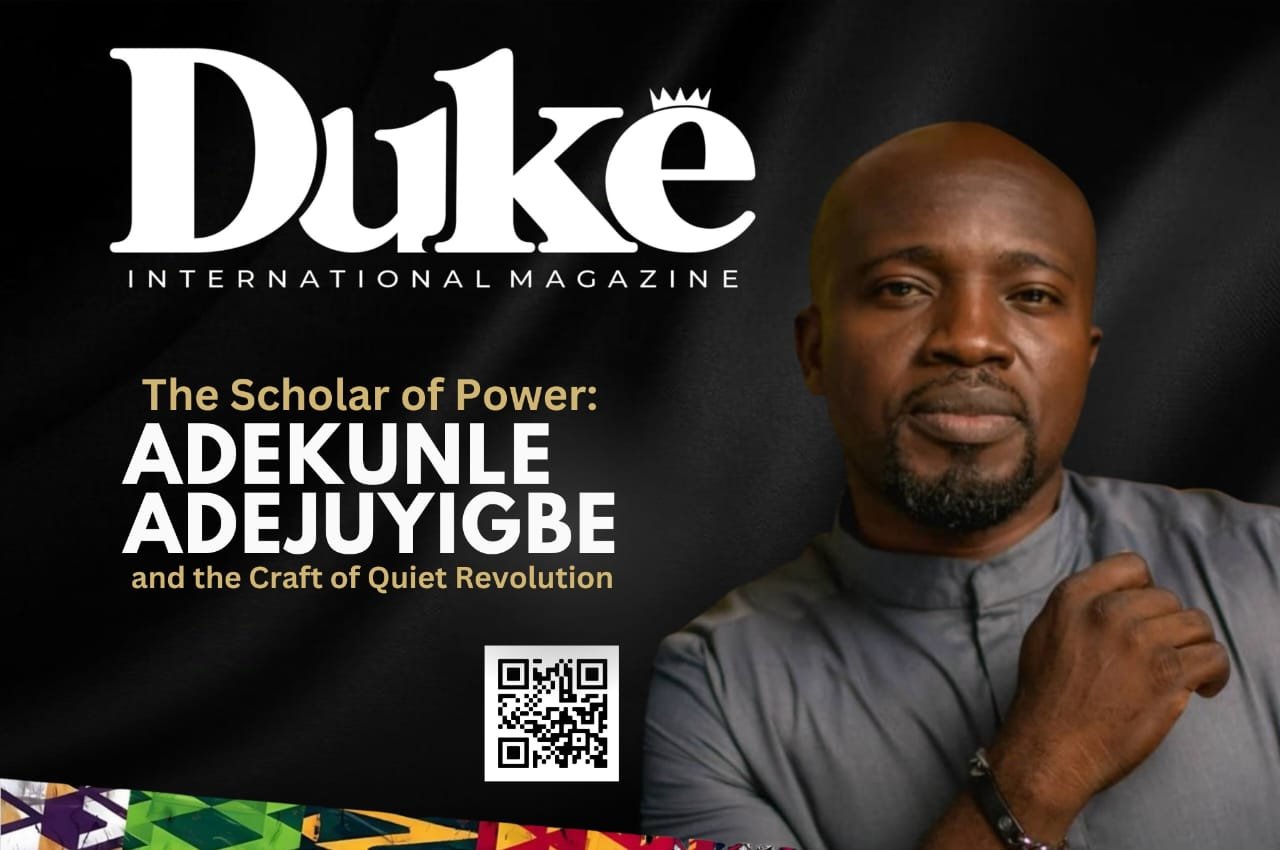
Adekunle Adejuyigbe, known throughout the Nigerian film industry as Nodash, is a filmmaker who has quietly reshaped the technical standards of contemporary Nollywood. Born and raised in Akure, a quiet town in Ondo State, he grew up in an environment he later described as offering a different perspective on life from the bustle of Lagos.
He first pursued a bachelor’s degree in electrical engineering at the University of Ilorin, a pragmatic choice that satisfied his family’s expectations and gave him the freedom to later follow a less certain path.
His entry into the entertainment industry was not abrupt but methodical. He began as a transmission engineer with the Nigerian Television Authority, learning the mechanics of broadcast from the inside.
From there, he moved through a succession of technical and creative roles—editor, creative director, head of production—at networks including Nigezie and Television Entertainment Network. This grounding in both the engineering and editorial sides of television gave him a command of the medium that would distinguish his later work.
By the early 2010s, Adejuyigbe had established himself as one of Nollywood’s most accomplished cinematographers. He served as director of photography on a string of notable productions: Kunle Afolayan’s Mokalik, The Bridge, and The Tribunal; the television series MTV Shuga Naija and Gidi Up; and the critically acclaimed feature Isoken.
His visual style, which earned him the nickname “the master of moods”, is marked by a preference for natural light, patient framing, and a refusal to treat mainstream commercial work with anything less than artistic seriousness.
His work on Omoni Oboli’s Wives on Strike: The Uprising, which grossed one hundred and twenty-seven million naira at the box office, placed him among the highest-grossing cinematographers in the industry. Yet his ambitions extended beyond the camera. In 2018, he wrote, directed, produced, and edited The Delivery Boy, his first self-funded feature film.
Shot in only five nights on a shoestring budget, the film addressed themes of domestic terrorism, child soldiering, and the abuse of young boys—subjects rarely treated with such directness in Nigerian cinema. It won the award for Best Nigerian Film at the Africa International Film Festival and screened at the twenty-fifth New York African Film Festival, where it was the only Nigerian feature in the programme.
That same year, his growing reputation earned him an invitation to the Berlin International Film Festival’s exclusive cinematography masterclass, one of only twenty-one cinematographers worldwide selected for the programme.
He has since served as a jury member for FESPACO, the Panafrican Film and Television Festival in Ouagadougou, and represented Nigeria at the Cannes Film Festival’s African Films Pavilion, Africa Day Geneva, and Nollywood Night in Marseille.
Behind the scenes, Adejuyigbe has worked to address a structural weakness in Nollywood: the absence of dedicated technical crews. Through his production company, Something Unusual Studios, he founded the Elite Film Team, assembling and training Nigeria’s first specialised technical unit.
This team provided the backbone for productions including Isoken and Gidi Up, and his studio continues to mentor young crew members, passing on knowledge he once had to acquire informally.
Adekunle Adejuyigbe remains based in Lagos, where he continues to direct, photograph, and develop new work. He is not a filmmaker given to grand pronouncements; his statements are made through composition, lighting, and the performances he draws from actors.
In an industry often driven by rapid production and commercial calculation, he represents a quieter, more deliberate current: the technician who became an auteur, and who builds his stories frame by considered frame.