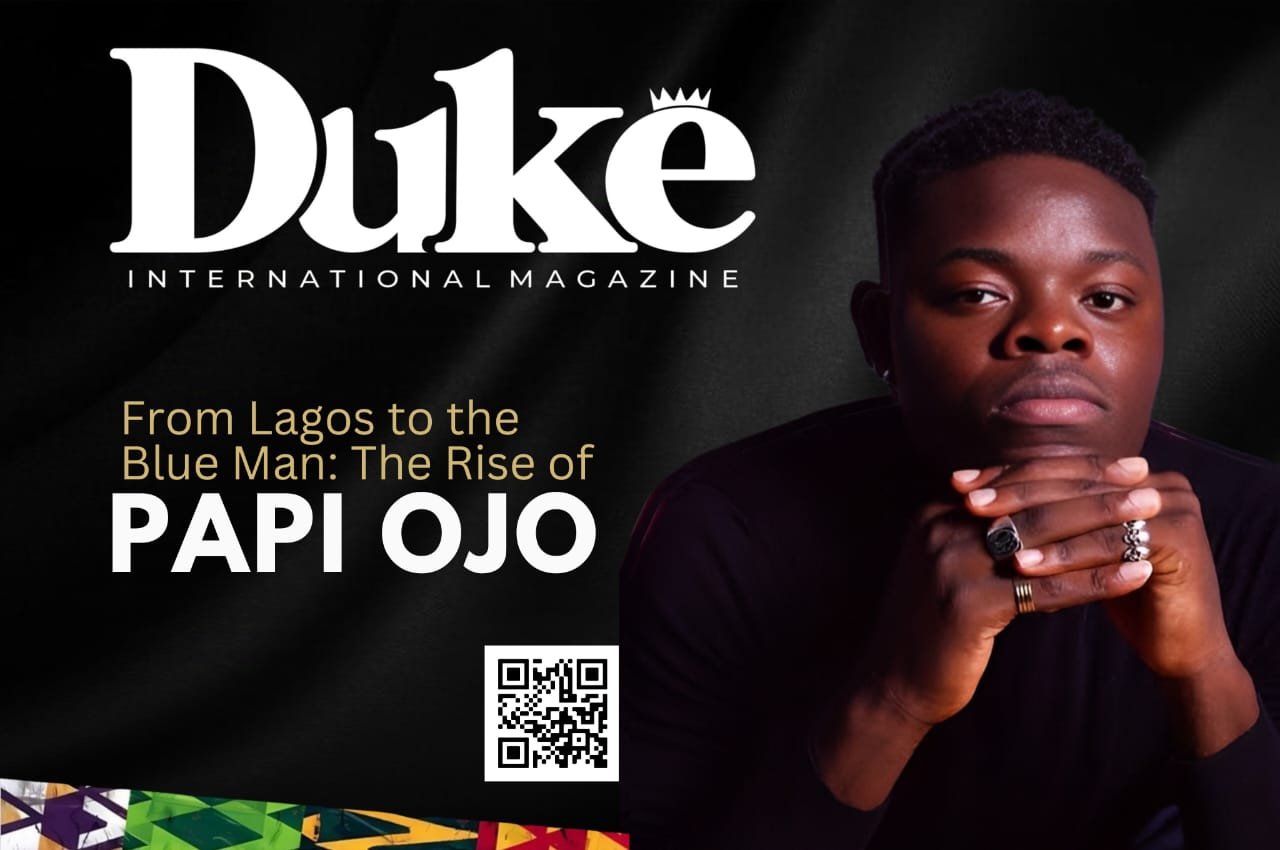
Of the many striking images from Beyoncé‘s 2020 visual album Black Is King, few were as mesmerising as the figure painted entirely in blue, moving with an ancestral grace alongside the star. This was the global introduction to Stephen Ojo, the Nigerian-American performer known professionally as Papi Ojo.
Yet, his story is not one of sudden fame, but rather the culmination of a journey marked by tragedy, a deep commitment to his heritage, and an unwavering drive to create.
Born in Lagos in 1998, Papi Ojo’s connection to movement and rhythm was forged in childhood, attending parties and absorbing the vibrant culture around him. This passion became a lifeline when his family emigrated to Brooklyn in 2008.
Settling in East New York, he, along with his older brother Emmanuel and a friend, Caleb Bonney, formed the dance group A.V.O Boyz, an acronym for Africa’s Very Own. The trio would spend countless hours learning and perfecting Afrobeat routines, posting their interpretations on social media and performing at local shows, planting the seeds for their future impact.
In 2016, however, their world was shattered. During a trip to Pennsylvania, Papi Ojo began drowning in a hotel pool. His brother, Emmanuel, rushed in to save him, successfully guiding him to safety. Tragically, by the time Papi Ojo had climbed out, Emmanuel was in distress; he drowned and passed away at the age of twenty-two.
The loss of his brother, who was also his best friend and creative partner, left Papi Ojo devastated and unable to dance for a while. He later recalled that he had to ask himself a defining question: would Emmanuel want him to quit, or to continue building the legacy they had dreamed of together? Choosing the latter, he channelled his grief into his work, a decision that would fuel his ascent.
Driven by this purpose, Papi Ojo, now a duo with Caleb, threw himself back into his art. Their persistence paid off spectacularly in 2018 when they were hired to perform with Rihanna at the Grammy Awards. In a moment of profound cultural exchange, Papi Ojo found himself not only dancing alongside a global superstar but also teaching her the South African gwara gwara dance move.
This high-profile appearance opened doors to a succession of major opportunities. He went on to work with a pantheon of music icons, including Janet Jackson on her “Made For Now” video, as well as Teyana Taylor, Big Sean, and Wizkid, steadily building a reputation as a sought-after dancer and choreographer with an authentic connection to African movement.
This reputation eventually led to the call that would change his life. In 2019, he was summoned to Los Angeles for a mysterious, high-profile job. It was for Beyoncé. His role grew from a supporting dancer in the “Spirit” video to something far more significant.
Flown to South Africa, Papi Ojo became the “blue man,” a spirit guide representing the subconscious of the young king, a character he imbued with his own personal meaning of transformation and moving forward from grief.
Beyond his performance, he served as a vital cultural consultant, teaching Beyoncé specific Nigerian moves such as the gbese and the legwork for their dynamic duet in the “Already” video. He felt the immense weight of representing his continent correctly, ensuring the dances were performed with authenticity and respect.
The experience of witnessing Beyoncé’s meticulous, hands-on creative control left a lasting impression, becoming a model for his own artistic ambitions.
Indeed, Papi Ojo is emphatically not just a dancer. He is a multi-hyphenate creative who is determined not to be confined to a single discipline. He is a recording artist who has released several singles, including “Beremole” and an EP titled Unexpected, which found success on African music charts.
His music, inspired by Afrobeat legends and contemporary stars alike, represents another facet of his artistic expression. Simultaneously, he has been diligently pursuing acting, taking private classes and securing roles in projects such as Ava DuVernay’s When They See Us and the television series Law & Order: Organized Crime.
From the streets of Lagos to the world’s biggest stages, Papi Ojo’s journey is a testament to resilience and the power of cultural pride. He carries his brother’s memory with him in every performance and approaches his career with the wisdom he has gathered from the icons he has worked with.
He is not merely seeking fame for himself but aims to build a foundation to help other dancers and to ensure that African creativity continues to receive the global recognition and respect it deserves. The blue man, it turns out, is a visionary in his own right.