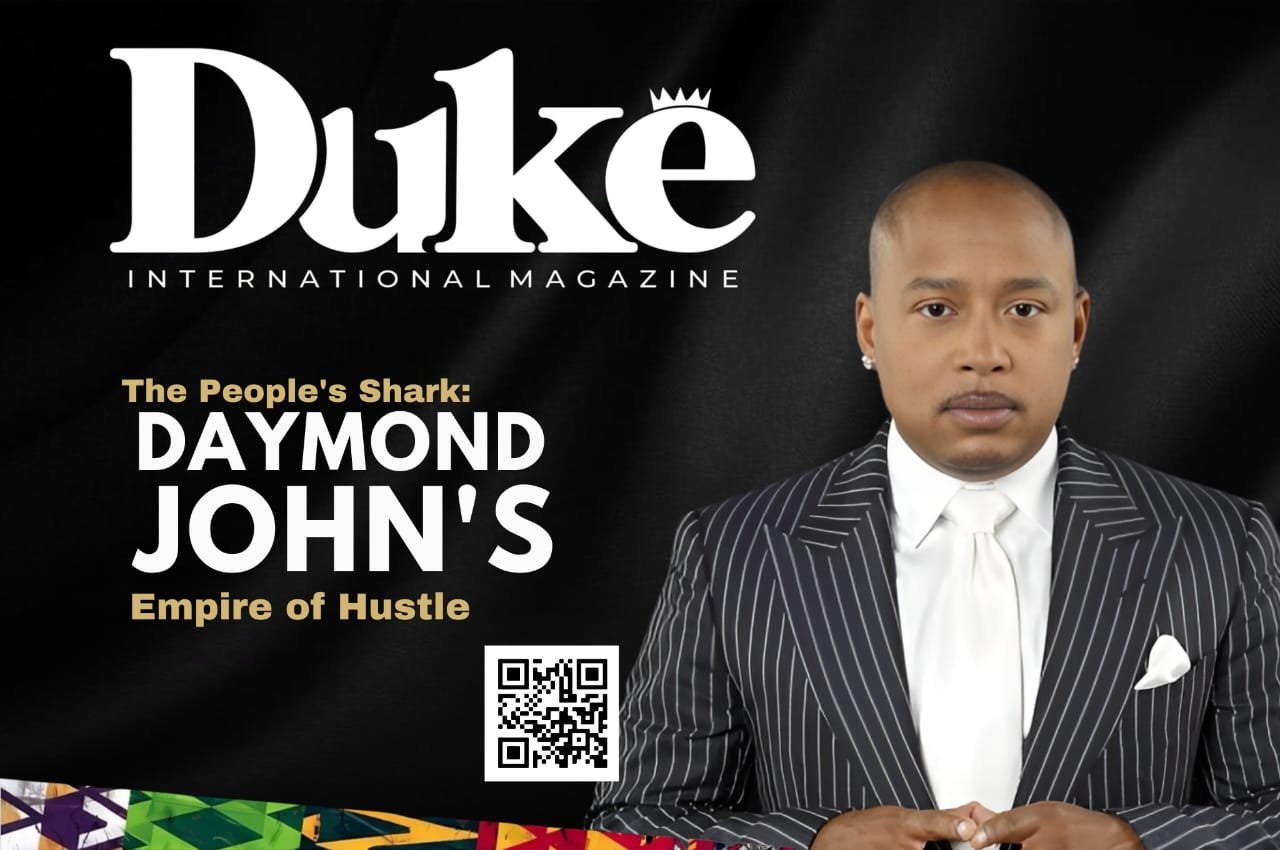
Before the designer suits and the television lights, before the deals worth millions and the title of Presidential Ambassador, Daymond John was simply a young man from Hollis, Queens, watching the heroes in his neighbourhood. Not the ones in the fancy cars, but the ones waking at five in the morning, working double shifts, and returning home long after dark just to do it all again.
Those were the people who taught him the value of a dollar and the power of a dream. It is a lesson he has spent the past three decades proving, building a business empire from a handful of homemade hats and an unshakeable belief in the possible.
Born in Brooklyn in 1969, John’s entrepreneurial journey began not in a boardroom but on the bustling corners of Jamaica Avenue. At the age of ten, following his parents’ divorce, he was already working, handing out flyers for two dollars an hour.
After high school, he started a commuter van service and waited tables at Red Lobster, all the while nursing an idea for a clothing line that spoke to the burgeoning hip-hop culture surrounding him. That idea became FUBU, an acronym for “For Us, By Us,” and it started in the only place it could: his mother’s house in Queens.
When John noticed popular wool ski hats selling for twenty dollars, a price he found exorbitant, he decided to make his own. With his mother’s guidance on the sewing machine, he and a neighbour produced ninety hats and sold them for ten dollars apiece on a street corner, netting eight hundred dollars in a single day.
Sensing the potential, his mother took a leap of faith that would define their lives, mortgaging her home to raise one hundred thousand dollars in start-up capital. With his childhood friends, John transformed the house into a makeshift factory, sewing logos onto jerseys and t-shirts.
To the outside world, the brand appeared massive, with its clothing appearing in dozens of music videos worn by stars like LL Cool J. The reality was far more humble; John was still serving shrimp and biscuits at Red Lobster, the business operating in the small hours between shifts.
He did not quit his waiting job until 1995 or 1996, by which point FUBU had secured a pivotal manufacturing deal with Samsung Textiles, allowing it to fulfil hundreds of thousands of dollars in orders. Today, that brand born in a basement has generated over six billion dollars in global sales and holds a place in the Smithsonian’s National Museum of African-American History and Culture.
In 2009, a phone call from renowned television producer Mark Burnett offered John a new platform. He was asked to join the cast of a reality business show called Shark Tank, where entrepreneurs pitch their ventures to a panel of potential investors. Now celebrating its seventeenth season, the show has become a cultural phenomenon, winning multiple Emmy Awards and reinvigorating public interest in entrepreneurship.
John, often called “The People’s Shark,” has invested millions of his own money in pitches that captured his imagination. Yet some of his most memorable moments on the show have been about more than just money. His deal with fifteen-year-old Moziah Bridges, founder of Mo’s Bows, involved mentorship rather than investment, a relationship that helped the young entrepreneur secure a seven-figure licensing partnership with the NBA.
The philosophy John brings to the tank is distilled from a lifetime of experience, a framework he calls his five “Shark Points”. He speaks of setting deeply personal goals, doing exhaustive homework, and remembering that, in business and in life, you are the brand.
He urges people to find love in what they do and, perhaps most personally, to keep swimming. In 2017, John was diagnosed with stage two thyroid cancer, a battle that underscored his final point: that health is the non-negotiable foundation upon which everything else is built. “If I can get one of you hard-headed people to go get a colonoscopy or a mammogram,” he told a crowd of finance professionals, “then I’ve done my job”.
John’s perspective on wealth has matured far beyond the accumulation of money. In a recent conversation with Forbes, he emphasised that the ultimate goal is not status but freedom: the peace of mind to spend time with family, to access healthcare, to live in a safe neighbourhood.
He warns against chasing quick profits, arguing that slow, sustainable growth builds a foundation of ambassadors who believe in your mission and insulate you when challenges arise. He advises entrepreneurs to be obsessed with their customers, to listen to complaints as opportunities, and to maintain brutal honesty with themselves about their motivations and their numbers. “When you know your numbers, you control your destiny,” he said.
Through six books, including the New York Times bestsellers The Power of Broke and his first children’s book, Little Daymond Learns to Earn, he continues to spread that message. He runs The Shark Group, a brand management and consulting firm, and remains a prominent public speaker, sharing the stage with world leaders and aspiring founders alike.
From the streets of Queens to the Oval Office, where President Obama appointed him to promote entrepreneurship among underserved communities, Daymond John’s story is a testament to the power of the hustle. It is a story that proves, time and again, that a little resourcefulness and a lot of heart can still build an empire.