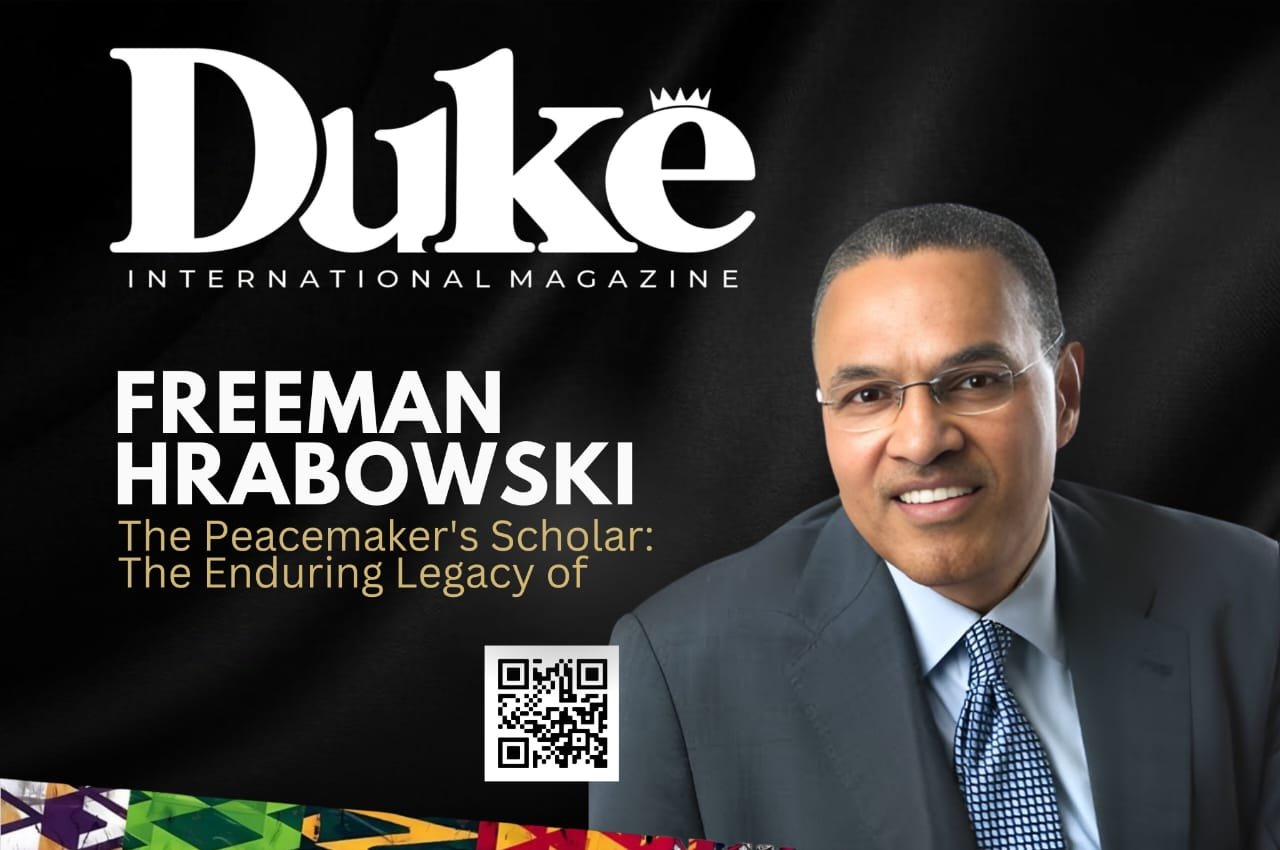
The trajectory of Freeman A. Hrabowski’s life was forged in the crucible of the American Civil Rights Movement. Born in segregated Birmingham, Alabama, in 1950, he was just twelve years old when he made a decision that would define his character. Inspired by the call for justice, he joined the Children’s Crusade in 1963, marching for equal rights alongside his peers.
The protest led to his arrest, and he spent five days in jail, an experience that included an encounter with the infamous Public Safety Commissioner Eugene “Bull” Connor, who spat on him. This early immersion in the struggle for equality instilled in him a profound and lifelong commitment to creating opportunities for the disenfranchised, a mission he would later pursue not on the streets, but in the halls of academia.
Dr Hrabowski’s academic path was marked by exceptional precocity. He graduated from the Hampton Institute with highest honours in mathematics at the age of nineteen, later earning a master’s degree in mathematics and a doctorate in higher education administration and statistics from the University of Illinois at Urbana-Champaign.
This unique combination of deep quantitative understanding and administrative expertise would become the bedrock of his life’s work. In 1987, he arrived at the University of Maryland, Baltimore County, a relatively young and unknown institution, serving first as vice provost before being appointed president in 1992. Over the subsequent three decades, he would lead a transformation so profound that it would garner international attention and reshape national conversations about science education.
The cornerstone of President Hrabowski’s legacy at UMBC is the Meyerhoff Scholars Programme, which he co-founded with philanthropist Robert Meyerhoff in 1988. Conceived as a direct response to the national underrepresentation of minorities in science, technology, engineering, and mathematics, the programme was built on a simple yet powerful premise: that with high expectations, a supportive community, and intensive faculty mentorship, students from all backgrounds could excel at the highest levels.
The programme’s design was data-driven and holistic, fostering a collaborative cohort culture that replaced the competitive isolation often found in the sciences. The results were nothing short of remarkable.
Under his leadership, UMBC became the leading university in the United States for producing Black undergraduates who go on to earn doctoral degrees in the natural sciences and engineering. This success transformed UMBC from a regional commuter school into a nationally recognised research institution and a model for inclusive excellence.
Dr Hrabowski’s influence extended far beyond the borders of his own campus. He became a trusted advisor to national agencies and political leaders, chairing a National Academies committee on minority participation in STEM and being appointed by President Barack Obama to chair the President’s Advisory Commission on Educational Excellence for African Americans.
His thinking, disseminated through numerous books including “The Empowered University” and his widely viewed TED talk, provided a blueprint for institutional change that has been emulated by colleges and universities across the country.
His philosophy was rooted in the belief that a university’s primary purpose is to serve the public good by empowering all students to solve the world’s most pressing problems, a concept he articulated by reminding young engineers that their work is fundamentally about helping people.
For his extraordinary contributions, Dr Hrabowski has been bestowed with some of the highest honours in the academic and scientific world. He has been named one of TIME magazine’s 100 Most Influential People in the World and has received the Carnegie Corporation’s Academic Leadership Award.
In 2023, the National Academy of Sciences awarded him its most prestigious honour, the Public Welfare Medal, for his “outstanding leadership in transforming U.S. science education and increasing cultural diversity within the science workforce”.
Upon his retirement in 2022, after thirty years as president, his legacy was further cemented by the Howard Hughes Medical Institute, which launched the $1.5 billion Freeman Hrabowski Scholars Programme, an initiative designed to perpetuate his model by supporting early-career scientists committed to fostering diversity and inclusivity in their own laboratories.
From a child jailed for seeking justice to an educator shaping the future of science, Freeman Hrabowski’s life stands as a powerful testament to the idea that the quest for equality and the pursuit of academic excellence are not separate paths, but one and the same journey.